.webp)
.webp)


Shopify B2B in the nordics: When your online store becomes a purchasing portal
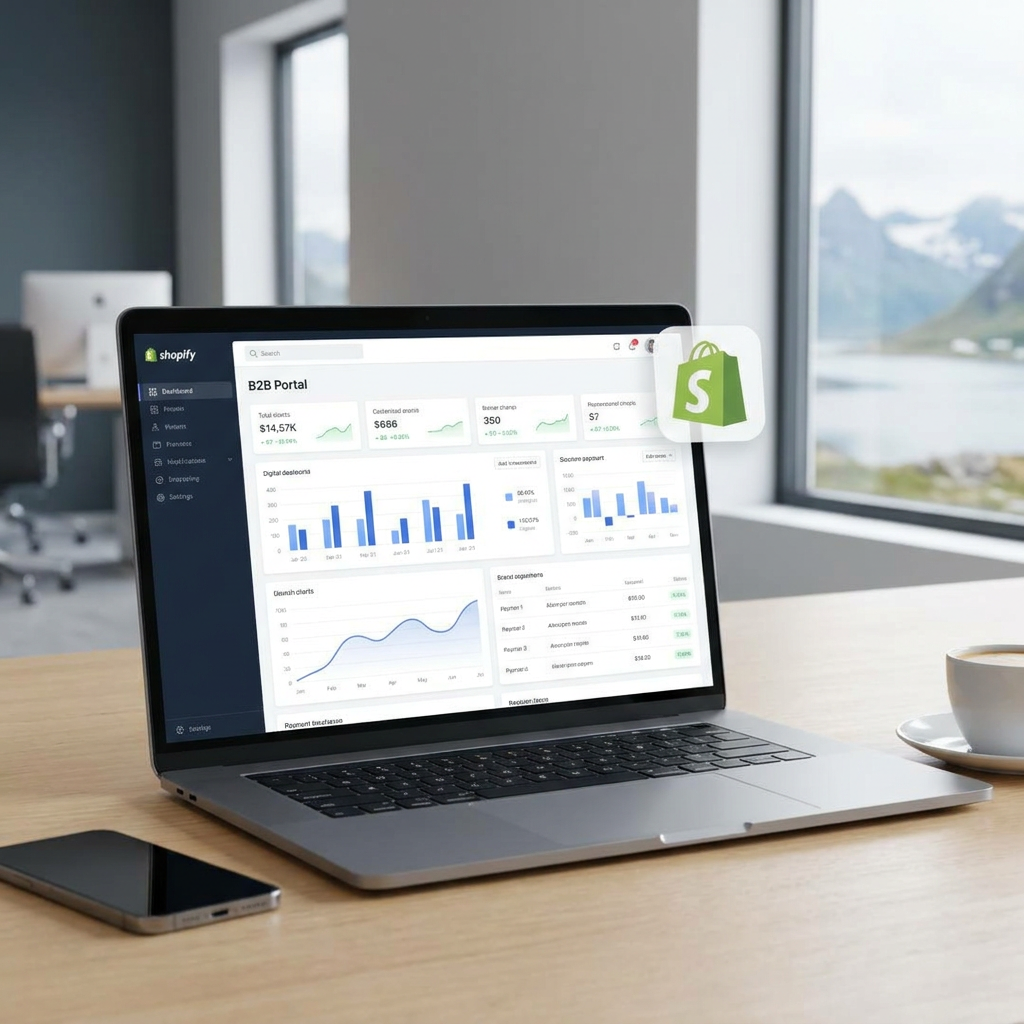
For many nordic retail businesses, e-commerce has long been synonymous with selling to consumers. Product pages, shopping carts, card payments, and shipping options. But an increasing share of digital commerce isn't about one customer buying one item. It's about corporate clients, regular buyers, volume discounts, invoicing, custom price lists, orders for approval, and recurring orders.
This is where Shopify B2B becomes interesting.
In April 2026, Shopify made a significant change: core B2B features became available for stores on Basic, Grow, and Advanced plans, not just Shopify Plus. This doesn't mean all advanced B2B needs can be met on the lower plans, but the threshold for building a professional procurement portal in Shopify has been significantly lowered.
For nordic businesses, this is relevant because many B2B sales are still handled manually. A customer sends an email with an order. A salesperson finds the correct price list. Someone checks stock availability. The order is entered into the ERP or accounting system. Perhaps the agreed price is in an Excel sheet, while product information is located elsewhere.
That works when the customer base is small, but it scales poorly.
A good B2B online store isn't just about "selling online." It's about making purchasing easier for existing customers.
When set up correctly, Shopify can function as a digital procurement portal where corporate clients log in, see the right products, the right prices, and place orders under agreed terms. This is particularly relevant for wholesalers, importers, distributors, manufacturers, and suppliers who sell to stores, retailers, installers, restaurants, clubs, or business customers.
The difference between B2C and B2B often lies in the details. A private customer expects quick payment and easy checkout. A corporate client might need multiple shipping addresses, different contacts, volume discounts, net payment terms, internal approval, or the ability to order the same items multiple times.
Shopify B2B makes it possible to work with companies, company locations, catalogs, price lists, and payment terms directly within Shopify. On Basic, Grow, and Advanced plans, many businesses can get started with fundamental B2B functionality. Shopify Plus offers more advanced capabilities, including multiple catalogs, more direct customer customization, and more flexible payment setups.
The most important thing, however, is not which Shopify plan you start with. The most important thing is to understand how customers actually buy.
Many start at the wrong end. They begin with design, colors, banners, and homepages. For B2B, the process should start with the sales flow. Who should be able to shop? What prices should they see? Who is allowed to pay by invoice? Should all orders go straight through, or should some be approved internally first? What data needs to be transferred to accounting, ERP, warehouse, and shipping?
Before a nordic company builds Shopify B2B, these questions should be clarified:
Payment is a good example of why the nordic context is important. Shopify Payments is now available in the nordics, making it easier to accept card payments and manage payments directly within Shopify. For many nordic online stores, Vipps/Mobilepay is also relevant, especially in B2C and mobile commerce.
But in B2B, the question isn't always “which payment button converts best?”. Often, it's about invoices, credit, net terms, accounting flow, and existing agreements with customers.
Therefore, the payment setup should be designed around how customers actually buy. Some business customers will pay by card. Others expect an invoice. Some require net 30. Others need orders approved by the purchasing manager before processing.
If the payment flow doesn't reflect reality, the solution quickly becomes cumbersome, even if the online store technically works.
The same applies to integrations. Shopify can be a strong customer portal, but most nordic B2B companies need orders, customers, stock status, and invoicing data to flow to other systems.
This could be an accounting system, ERP, shipping solution, CRM, or email platform. If integrations are planned after the online store is built, the project often becomes more expensive and complicated than necessary.
A B2B solution should therefore not be considered 'just a Shopify site'. It should be viewed as part of the sales and operational process.
For some businesses, Shopify B2B is a good choice because they already have a product catalog, regular customers, and recurring orders.
For others, it's too early. If the pricing structure is unclear, product data is outdated, or the order process varies from customer to customer, internal cleanup should be done before building a digital portal. Otherwise, you're just digitizing the mess.
This also means that Shopify B2B should not be sold as a single standard package. A smaller wholesaler with three customer groups and simple payment terms can often achieve a lot with a clean setup. A larger player with many markets, customer-specific agreements, ERP dependencies, and advanced invoicing workflows needs a more thoroughly developed solution – and perhaps Shopify Plus.
The great opportunity lies in simplifying daily life for both the customer and the sales team. When a regular customer can log in, see the correct products, correct prices, and place orders without waiting for email replies, it creates immediate value.
When salespeople don't have to spend time on standard orders, they can instead focus on consulting, relationships, and upselling.
Shopify B2B in the nordics is therefore not about copying an American enterprise trend. It's about something far more practical: giving the nordic business customers a better way to buy.
See how we can help you with Shopify here
.webp)